

75% of U.S. health systems are using at least one AI application in their processes. Artificial intelligence is improving patient satisfaction in healthcare by:
- reducing wait times
- personalizing communication
- automating administrative tasks,
- supporting faster clinical decisions.
According to the U.S. Department of Health and Human Services, “AI-driven interoperability and digital health systems are helping healthcare organizations improve care coordination and patient engagement in 2026.”
What makes this shift more important is how quickly these AI systems are adapting healthcare operations. This is the time to understand these systems and start using them early so your practice doesn’t fall behind in patient expectations.
What Is AI in Healthcare?
In healthcare, AI involves using complex software technologies to automate processes, and assist in healthcare decisions.
Healthcare organizations use AI tools to:
- Automate appointment scheduling
- Improve patient communication
- Reduce claim processing delays
- Support clinical decision-making
- Monitor patient conditions remotely
- Predict patient risks earlier
- Improve medical documentation accuracy
How Is AI Improving Patient Satisfaction in Healthcare?
Healthcare providers using AI-powered systems can give patients more accurate and personalized care. It also helps to enhance efficiency and patient satisfaction. The use of AI has made healthcare services faster so that patients don’t need to wait for hours.
Patients now expect:
- Shorter waiting times
- Faster insurance approvals
- Better communication
- Digital scheduling options
- Accurate billing processes
- 24/7 support access
AI systems help healthcare providers meet these expectations.
Harvard Medical School reports that “AI technologies now support diagnosis assistance, administrative automation, and patient engagement across modern healthcare systems.”
1. AI Reduces Patient Waiting Times
AI helps in scheduling appointments, provider availability, and appointment cancellations. The AI scheduling systems are faster and more efficient.
Hospitals that are using scheduling tools can:
- Minimize overcrowding
- Reduce missed appointments
- Improve patient flow
- Optimize staffing levels
Shorter waiting times directly improve patient satisfaction scores.
2. AI Improves Communication
AI chatbots and virtual assistants are used in healthcare systems. They respond to the patients instantly for:
- Appointment reminders
- Medication instructions
- Billing questions
- Insurance verification
- Post-treatment follow-ups
These systems improve healthcare accessibility even outside clinic hours.
3. AI Supports Personalized Care
AI tools analyze patient history, medical records, and behavioral patterns to support individualized treatment recommendations.
Personalized care improves:
- Treatment adherence
- Patient trust
- Clinical outcomes
- Long-term engagement
4. AI Improves Billing Accuracy
Medical billing errors reduce patient trust and increase frustration among them. It badly affects patient retention.
AI-driven billing systems help providers in the following ways:
- Detect coding errors
- Reduce denied claims
- Improve payment transparency
- Speed up reimbursement cycles
According to the U.S. National Library of Medicine, “AI technologies improve clinical workflow, patient monitoring, and healthcare communication when implemented correctly.
Table: How AI Improves Patient Satisfaction
| AI Technology | Function in Healthcare | Patient Benefit |
| Predictive Scheduling | Reduced delays | Faster appointments |
| AI Chatbots | Instant communication | 24/7 patient support |
| Predictive Analytics | Early risk detection | Better treatment outcomes |
| Automated Billing | Fewer claim errors | Clearer healthcare costs |
| Remote Monitoring | Continuous care | Improved chronic care management |
| AI Documentation Tools | Faster clinical notes | More provider-patient interaction |
Creative Ways to Increase Patient Satisfaction With AI
Here is how you can use AI in your system to increase patient satisfaction:
Use Voice AI for Appointment
Patients can schedule appointments using AI agents. They will not have to wait on hold.
Automate Insurance Verification
AI systems can check insurance coverage before patient visits. This will help avoid confusion and overcharging.
Implement Remote Patient Monitoring
These devices monitor conditions such as hypertension, diabetes, and cardiac health. It will improve preventive care and lower rehospitalization risk.
Use Ambient AI Documentation
Ambient intelligence listens during patient visits and automatically generates clinical notes. This will save the time you spend on documentation. You can focus more on the patient.
Improve Revenue Cycle Transparency
AI-based billing systems provide patients with:
- Cost estimates
- Payment reminders
- Digital invoices
- Faster dispute resolution
Clear financial communication improves the overall patient experience
The American Hospital Association states that “healthcare organizations must maintain governance and human oversight when implementing predictive AI systems.”
Healthcare providers should use AI as a support system, not a replacement for clinical judgment.
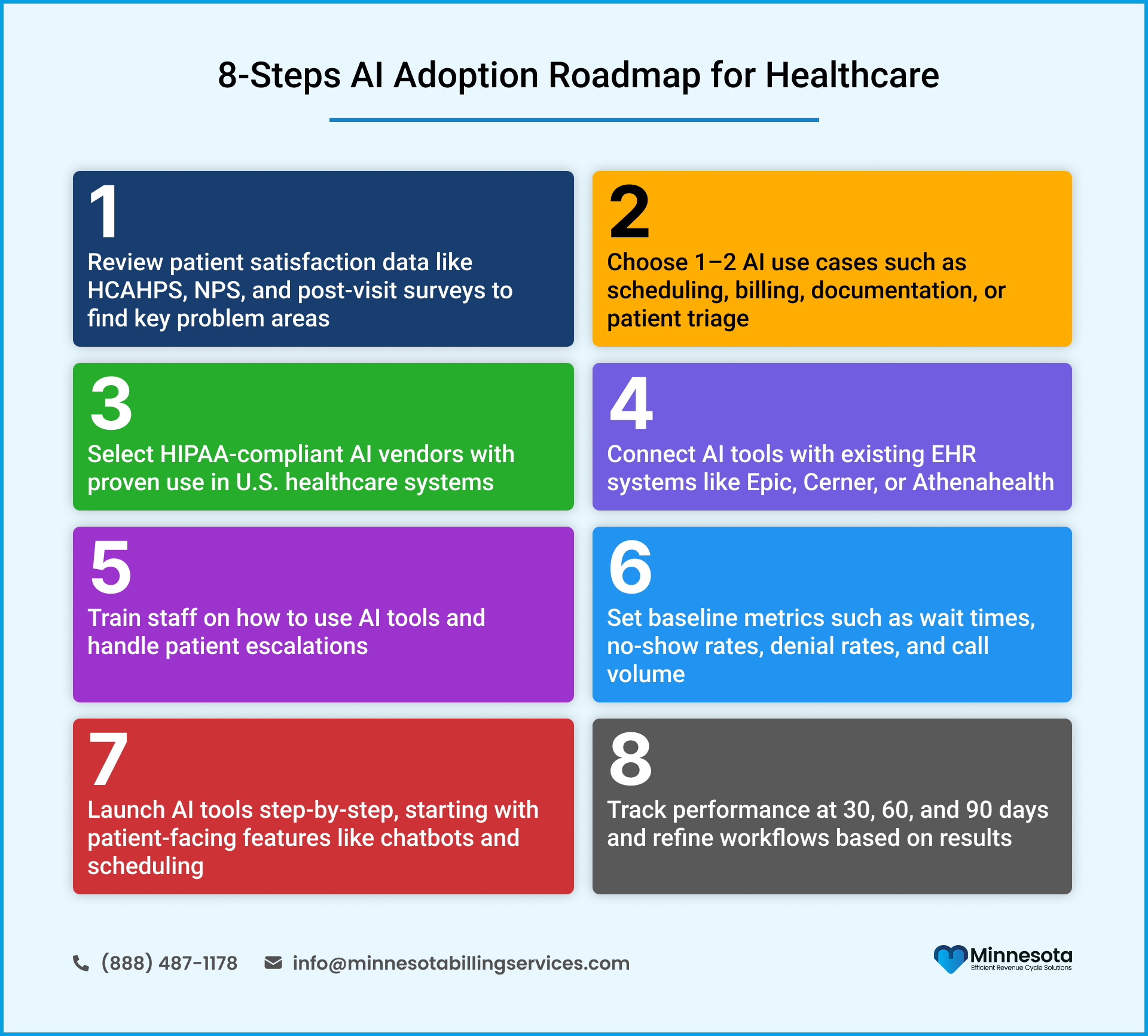
Improve Patient Satisfaction With Smarter Billing Solutions
Providers that combine AI technologies with their billing systems are performing better in terms of revenue and patient retention.
Organizations can only see the full impact of AI when their billing operations are accurate, efficient, and properly managed. A weak billing process can still affect patient experience and revenue performance.
At Minnesota Billing Service, we helps healthcare organizations improve patient satisfaction. We provide accurate medical billing, streamlined revenue cycle management, and operational efficiency.
Contact Minnesota Billing Services Today
Frequently Asked Questions
-
What are the most common AI tools used in healthcare?
The commonly used AI tools in healthcare are:
- predictive analytics platforms
- AI chatbots
- automated billing systems
- remote monitoring devices
- clinical documentation software.
-
Can AI reduce medical billing errors?
Yes. AI reduces medical billing errors by
- automating complex coding
- validating claims in real-time
- streamlining insurance verification.
-
Does AI replace healthcare professionals?
No. AI does not replace healthcare professionals. It supports healthcare professionals by handling tasks more efficiently and accurately.