
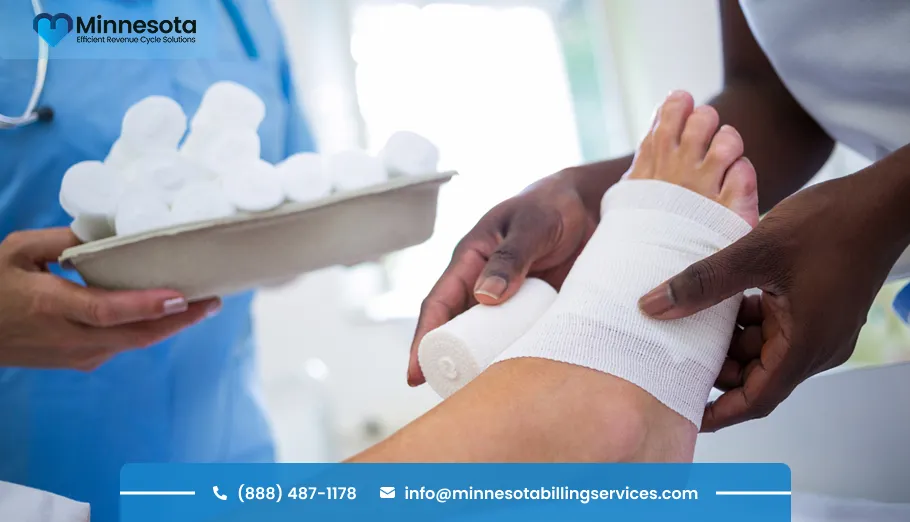
There is no standalone CPT code for simple wound cleaning when it involves irrigation, saline wash, or routine dressing change. These services are bundled into E/M visits or procedure codes and are not separately reimbursable. Billing errors occur when providers report surgical debridement codes (11042–11047) or selective debridement (97597–97598) without documented removal of devitalized tissue.
In 2026, payers continue to scrutinize wound care claims for medical necessity, depth documentation, and surface area accuracy. It’s important to learn what qualifies as billable debridement, what remains bundled, and how to document wound care correctly to prevent denials and audit exposure.
Understanding Wound Cleaning Vs. Debridement
The distinction between wound cleaning and debridement determines appropriate coding. This difference significantly impacts reimbursement and compliance.
What Constitutes Wound Cleaning?
Wound cleaning involves removing loose debris, exudate, and secretions from a wound surface. This process uses irrigation, gentle wiping, or soaking without tissue removal.
Simple wound cleaning activities include:
- Saline irrigation
- Gentle cleansing with gauze
- Removing loose drainage
- Washing bacterial debris
- Soaking wounds
These activities alone don’t constitute billable services requiring a CPT code for wound cleaning.
Debridement Procedures
Debridement involves removing devitalized or necrotic tissue through various methods. Unlike simple cleaning, debridement requires specific CPT codes based on depth and method.
Debridement methods include:
- Sharp surgical debridement
- Selective enzymatic debridement
- Mechanical debridement
- Autolytic debridement
When Simple Wound Cleaning is NOT Separately Billable
Medicare and most payers don’t reimburse simple wound cleaning as a distinct service. Understanding these limitations prevents inappropriate billing.
Bundled Services
Wound cleaning bundles into other procedures performed during the same encounter. When providers perform wound debridement, the cleaning component is included in the debridement code.
Medicare states: “A dressing change may not be billed as either a debridement or other wound care service under any circumstance”.
E/M Service Component
When wound cleaning occurs as part of an office visit without additional procedures, it factors into the evaluation and management (E/M) service level. The appropriate CPT code for wound cleaning in this context is the E/M code itself (99202-99215), not a separate procedure code.
Document wound assessment and cleaning in the visit note, but bill only the E/M service.
| Service Type | Billable? | Appropriate Code | Documentation Required |
| Simple wound irrigation | No | Include in E/M | Wound description, cleaning method |
| Cleaning with gauze removal | No | Include in E/M | Exudate type, wound appearance |
| Dressing change only | No | Not separately billable | Dressing type, wound status |
| Cleaning + debridement | Yes | 97597/97598 or 11042-11047 | Tissue removed, depth, and medical necessity |
| Cleaning + incision & drainage | Yes | 10060/10061 | Abscess description, drainage volume |
Active Wound Care Management Codes
When wound cleaning combines with active therapeutic interventions, specific codes apply. Understanding these combinations ensures the appropriate CPT code for wound cleaning applications.
CPT Code 97602: Non-Selective Debridement
This code represents wound cleaning with non-selective debridement methods like wet-to-dry dressings, whirlpool therapy, or enzymatic agents. The CPT code for wound cleaning in this context includes the cleaning component as part of the debridement service.
CPT 97602 cannot be reported with selective debridement codes (97597-97598) for the same wound on the same date.
Selective Debridement (97597-97598)
These codes apply when providers perform selective removal of devitalized tissue. Wound cleaning is inherent in these procedures and not separately coded.
- CPT 97597: Debridement, open wound; first 20 sq cm or less
- CPT 97598: Each additional 20 sq cm (add-on code)
The cleaning that occurs during selective debridement is part of the procedure, not a separate CPT code for wound cleaning.
Surgical Debridement (11042-11047)
Surgical debridement codes include wound preparation and cleaning. Dressings applied after debridement are also bundled.
No separate CPT code for wound cleaning applies when performing surgical debridement.
Incision and Drainage Procedures
Incision and drainage (I&D) procedures include wound cleaning components but use specific codes based on complexity.
CPT Codes 10060-10061
- CPT 10060: Incision and drainage of abscess; simple or single
- CPT 10061: Incision and drainage of abscess; complicated or multiple
These procedures involve opening an abscess, drainingits contents, and cleaning the cavity. The cleaning component bundles into the I&D code.
The CPT code for wound cleaning in I&D situations is the I&D code itself, not a separate cleaning code.
Distinguishing I&D from Routine Care
I&D procedures require local, regional, or general anesthesia and involve sufficient tissue disruption to establish drainage. This distinguishes them from simple wound cleaning.
Simple abscess drainage without these elements doesn’t qualify for I&D coding.
Chemical Cauterization Vs. Wound Cleaning
Chemical application to wounds serves different purposes than cleaning and requires specific coding understanding.
CPT Code 17250
This code applies to chemical cauterization of granulation tissue using substances like silver nitrate. It may include the removal of loose granulation tissue but differs from wound cleaning.
Chemical cauterization targets excessive healing tissue, not wound cleansing. The CPT code for wound cleaning doesn’t apply to these procedures.
Application Vs. Cleaning
Applying topical medications after wound cleaning doesn’t create a separately billable service. The medication application is part of wound management, included in the E/M service or other primary procedure.
Wound Irrigation Procedures
Irrigation involves flushing wounds with saline or other solutions. This common wound care technique requires careful coding consideration.
When Irrigation is Included
Irrigation is performed as part of wound assessment, dressing changes, or pre-procedural preparation bundles into other services. No separate CPT code for wound cleaning applies in these situations.
Document irrigation volume and solution used, but don’t bill separately.
High-Pressure Irrigation
Some complex wounds require high-pressure irrigation systems. Even these advanced cleaning techniques are bundled into the primary procedure code when performed as wound preparation.
The CPT code for wound cleaning through irrigation is typically the debridement or other primary procedure code.
Ultrasonic Wound Cleaning
Low-frequency, non-contact, non-thermal ultrasound (MIST therapy) represents an advanced wound cleaning technology with specific coding.
CPT Code 97610
This code describes low-frequency ultrasound wound treatment. However, it cannot be separately reported with other active wound care management codes (97597-97606) or debridement codes (11042-11047, 97597, 97598) for treating the same wound on the same day.
Only one 97610 service per day is allowable for a qualifying wound.
Documentation Requirements
Document medical necessity for ultrasonic wound treatment, including:
- Failed standard wound therapy
- Wound characteristics justifying ultrasound
- Treatment goals and expected outcomes
- Patient response to previous treatments
Wound Care in Different Settings
The CPT code for wound cleaning application varies by treatment setting and provider type.
Outpatient Office Setting
In office settings, simple wound cleaning integrates into E/M services. Only when combining cleaning with debridement or other procedures do specific wound care codes apply.
Skilled Nursing Facilities
For Medicare Part A-covered SNF stays, wound care services, including cleaning bundle into the prospective payment to the facility. The CPT code for wound cleaning doesn’t apply to Part A services.
Under Part B non-covered SNF stays, wound care services may be billable using appropriate procedure codes when medical services are covered, although room and board are not.
Hospital Outpatient Departments
Hospital outpatient settings follow similar bundling rules. Wound cleaning as part of other procedures doesn’t receive separate reimbursement.
Documentation Requirements for Wound Care
Proper documentation supports appropriate coding for any wound care service, including situations where no separate CPT code for wound cleaning exists.
Essential Documentation Elements
Every wound care encounter should document:
- Wound description: Location, size (length x width in cm), depth, tissue type
- Exudate characteristics: Amount, color, odor, consistency
- Wound bed appearance: Granulation, slough, eschar, epithelialization percentage
- Periwound condition: Maceration, erythema, induration, edema
- Cleaning method: Solution used, irrigation pressure, cleansing technique
- Post-cleaning appearance: Changes in wound bed, debris removed
- Treatment plan: Dressing applied, next cleaning scheduled, expected healing
Photograph Documentation
Wound photographs provide powerful documentation supporting medical necessity for wound care services. Take standardized photos showing wounds before and after cleaning and treatment.
Maintain HIPAA-compliant storage and obtain patient consent for photography.
Teaching Providers Appropriate Wound Care Billing
Provider education prevents inappropriate CPT codes for wound cleaning billing that trigger audits.
Common Provider Misconceptions
Many providers believe:
- All wound care procedures are separately billable
- Spending significant time on wound care justifies separate codes
- Complex wound cleaning equals debridement
- Any tissue removal qualifies as debridement
These misconceptions lead to billing errors and compliance issues.
Educational Strategies
Provide clear examples distinguishing:
- Simple cleaning (not separately billable) from debridement (billable)
- Routine dressing changes (bundled) from active wound care (potentially billable)
- Assessment activities (E/M component) from therapeutic procedures (separate codes)
Regular case-based training reinforces proper coding decisions.
Compliance Issues with Wound Cleaning Billing
Inappropriate wound cleaning billing creates serious compliance concerns.
Upcoding Risks
Billing debridement codes when only cleaning occurred constitutes upcoding. This practice:
- Violates Medicare billing rules
- Creates False Claims Act exposure
- Triggers audits and reviews
- Results in repayment demands
There is no legitimate CPT code for wound cleaning when only cleaning occurs—bill the appropriate E/M code instead.
Audit Red Flags
PPayers’flag patterns suggesting inappropriate wound care billing:
- High frequency of debridement codes
- Debridementis billed at every visit
- Lack of documentation supporting tissue removal
- Absence of medical necessity justification
Wound Care Supplies and Dressings
Supplies used in wound cleaning and dressing generally aren’t separately billable.
Included Supplies
Medicare doesn’t separately reimburse for:
- Saline irrigation solutions
- Cleansing agents
- Gauze used in cleaning
- Standard dressings
- Gloves and basic supplies
These items are bundled into the procedure or E/M service.
Advanced Dressings
Certain advanced wound care dressings may be separately billable under specific circumstances, but standard dressings applied after wound cleaning are not.
No separate CPT code for wound cleaning or dressing application exists outside the primary procedure.
Alternative Coding When Debridement Doesn’t Apply
When wounds need care but debridement isn’t appropriate, proper coding depends on the services provided.
Evaluation and Management Codes
When only assessment and simple wound care occur, bill the appropriate E/M code (99202-99215 for office visits). Document:
- Detailed wound assessment
- Medical decision-making regarding the treatment plan
- Counseling provided
- Coordination of care
The CPT code for wound cleaning in these situations is the E/M code reflecting visit complexity.
Modifier -25 for Separate E/M
When performing a procedure like debridement and providing significant, separately identifiable E/M services, modifier -25 allows billing both codes.
The E/M must address issues beyond the wound requiring the procedure.
Make Your Wound Care Billing Simple and Profitable
Wound care billing can get confusing fast, especially when it comes to choosing the right CPT codes and meeting strict documentation rules. If claims are denied or underpaid, it directly impacts your revenue. That’s where we help.
Our Medical Billing Experts in Minnesota work with practices to clean up coding mistakes, review documentation, and make sure every wound care service is billed correctly. We stay on top of CPT updates and payer rules so you don’t have to.
If you’re tired of denials, delays, or second-guessing your coding, let’s fix it. Contact us to schedule your free wound care billing assessment and see how we can help you get paid accurately and on time.
Frequently Asked Questions
1. Can I bill separately for wound irrigation?
No. Wound irrigation is considered routine care and is bundled into E/M visits or other procedures performed the same day.
2. What’s the difference between billable and non-billable wound cleaning?
Non-billable cleaning removes loose debris only, while billable services require documented tissue removal or therapeutic procedural intervention.
3. How should I code a dressing change with wound cleaning?
Dressing changes with routine cleaning are bundled into the E/M service or related procedure and are not separately reimbursed.
4. Can therapists bill for wound cleaning services?
Therapists may bill selective debridement within the scope of practice, but simple wound cleansing alone is not separately billable.
5. What documentation prevents wound cleaning billing errors?
Clearly document wound measurements, cleaning method, tissue removal details, depth involved, and distinguish cleansing from true debridement procedures.